

5 Internet of Things(IoT) Technologies
TABLE OF CONTENTS
Share on Social Media
Related Blogs

Understanding React Portals (createPortal) -Use Cases, Advantages, and Limitations
Read More: Understanding React Portals (createPortal) -Use Cases, Advantages, and Limitations
What are Promises in JavaScript?
Read More: What are Promises in JavaScript?
Importance of Estimation in Software Development The First Step to Success
Read More: Importance of Estimation in Software Development The First Step to Success
Why Choose Cross-Platform Mobile App Development? Which Technology Is The Best?
Read More: Why Choose Cross-Platform Mobile App Development? Which Technology Is The Best?
Are you aware of the latest Internet of Things technologies? In this article, we have highlighted the top IoT technologies. These technologies are perfect for expanding the current business models. The reason is that with the help of IoT the businesses go beyond the data, analytics and intelligence boundaries.
Let’s take a look at some of the Internet of Things technologies for 2017 and beyond:
1) Security in Internet of Things Technologies
IoT introduced new security technology for the protection of IoT devices. This protection is from tampering and information attacks. The issue is that many IoT uses simple processors and operating systems that might not support advanced security approach.
Moreover, the platforms and devices must be protected by tackling new risks like impersonating ‘things’. Along with this, denial of sleep attack that drains the batteries must also be addressed. Some of the communication must be encrypted as well to keep them safe.
2) IoT Device Management
There will be a requirement to develop new tools. These tools will be able to handle and monitor millions of devices. The management of devices will include software updating to diagnostics and reporting. Along with this, security management and physical management will be its task. As a result of this, a new set of problems will emerge that must be tackled. The seller’s dealing in tools gained from Mobile Device Management is inexpert in IoT. There is a probability that they will not offer the right features or pricing models.
3) Internet of Things(IoT ) Processors
The processors and designs used by IoT devices will outline their capabilities. These includes:
- Do they have the capability of strong security and encryption?
- Are the advanced enough to support an operating system?
- Power consumption
- Embedded device management agents.
However, for understanding the consequence of processor choices, deep technical skills will be required.
4) Low-Power, Short Range Networks
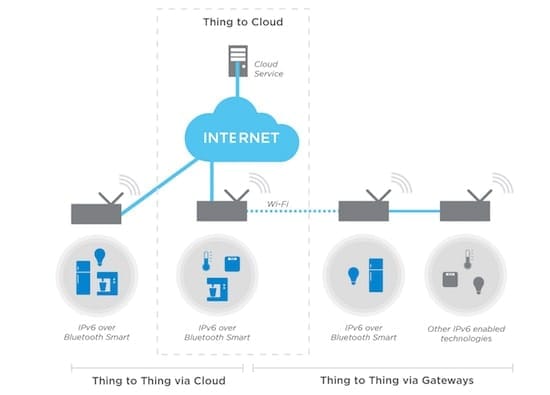
The low-power, short-range networks will be leading the wireless IoT connectivity at least till 2025. Sooner or later, the user of this network will be more than wide area networks. Choosing a wireless network for IoT device might depend on having a balance between many factors. These factors may include:
- Battery life
- Range
- Operational costs
- Endpoint cost
- Bandwidth
Nonetheless, many solutions will exist as there will be no one winner. These solutions will be grouped together around technologies and applications.
5) Low-Power, Wide Area Network
For the IoT applications that depend on wider network coverage. Along with this, they require low bandwidth, low hardware, good battery life and operating cost. The existing cellular networks don’t provide a right blend of technical features and operational cost.
The persistent goal of wide area networks is to offer data rates. These rates starting from 100 bits per seconds to tens of kilobits per second with national coverage. Apart from this, they aim to provide battery life that can last up to 10 years, an endpoint hardware cost near $5.
Furthermore, the very first low-power wide area network was based on exclusive technology. The developing standards like Narrowband IoT and Wi-Fi are probable to lead. If you have any suggestions, feel free to comment below.
Share on Social Media
Related Blogs

Generative AI and Its Impact: Everything You Need to Know About This Creative Technology
Read More: Generative AI and Its Impact: Everything You Need to Know About This Creative Technology
5 Useful JavaScript tips and tricks and best practices
Read More: 5 Useful JavaScript tips and tricks and best practices
What is the identity server in ASP.NE core ?
Read More: What is the identity server in ASP.NE core ?
What is JavaScript Spread Operator?
Read More: What is JavaScript Spread Operator?Stay ahead of the curve
Get the latest insights, tutorials, and industry news delivered straight to your
inbox. Join 10,000+ developers and tech leaders.