
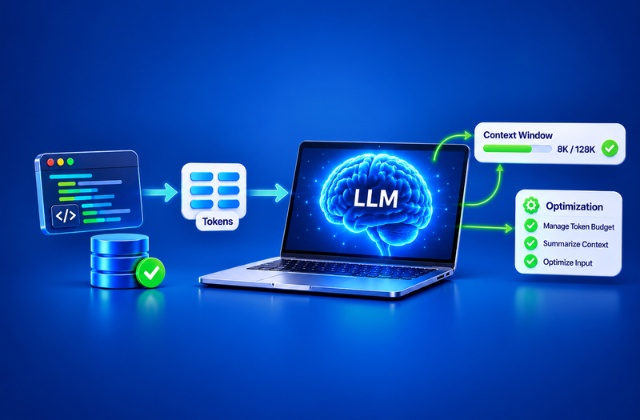
LLM Context Window Management in Node.js Applications
TABLE OF CONTENTS
- LLM context windows: the short answer
- Why context management matters in production
- What is a context window?
- Why long inputs use more compute and memory
- Four context-management risks to plan for
- Practical context-management patterns for Node.js teams
- A reliable approach to context management
- Planning an LLM-powered application?
- Conclusion
- Frequently Asked Questions (FAQs)
- Stay ahead of the curve
Share on Social Media
Related Blogs
What are JavaScript Arrow Functions?
Read More: What are JavaScript Arrow Functions?
What is Docker? How to Deploy and Install Redis in Docker
Read More: What is Docker? How to Deploy and Install Redis in Docker
How to Execute Parallel Processing with Powershell?
Read More: How to Execute Parallel Processing with Powershell?
How is GPT-4 A Superior Model to ChatGPT?
Read More: How is GPT-4 A Superior Model to ChatGPT?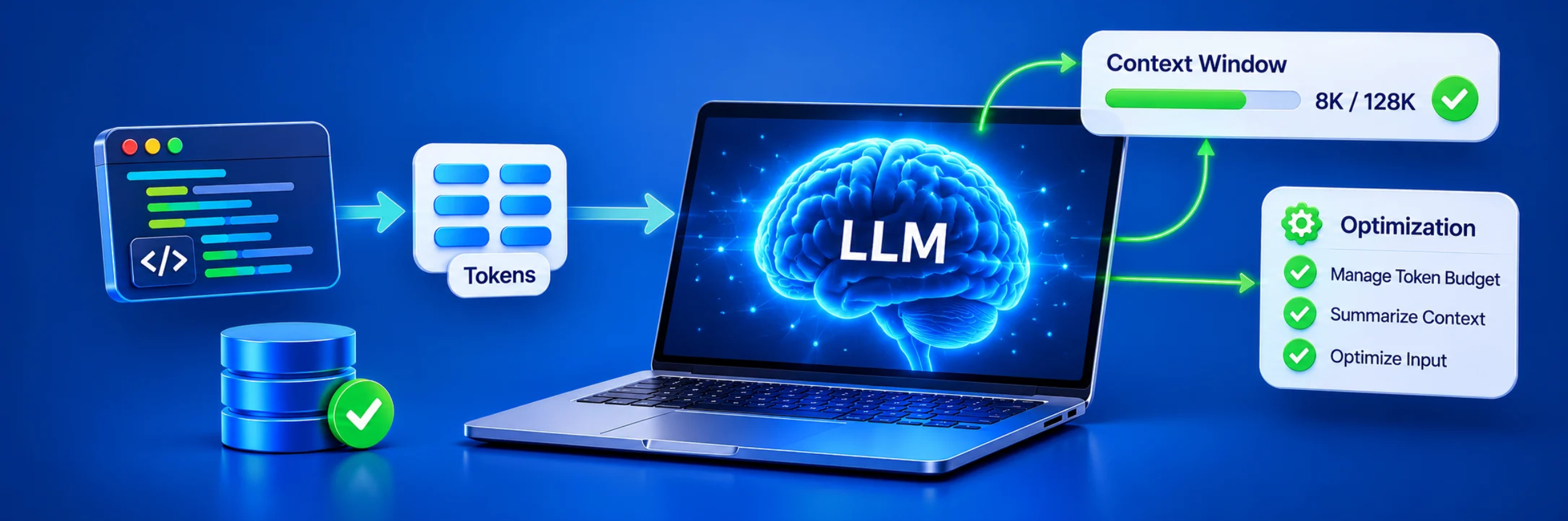
LLM context windows: the short answer
An LLM context window is the model’s per-request capacity for input and generated tokens. In a Node.js application, effective context management means counting the complete request, keeping only useful information, reserving room for the response, and handling requests that approach model limits. This helps teams control token use and reduce avoidable truncation or request failures.
Why context management matters in production
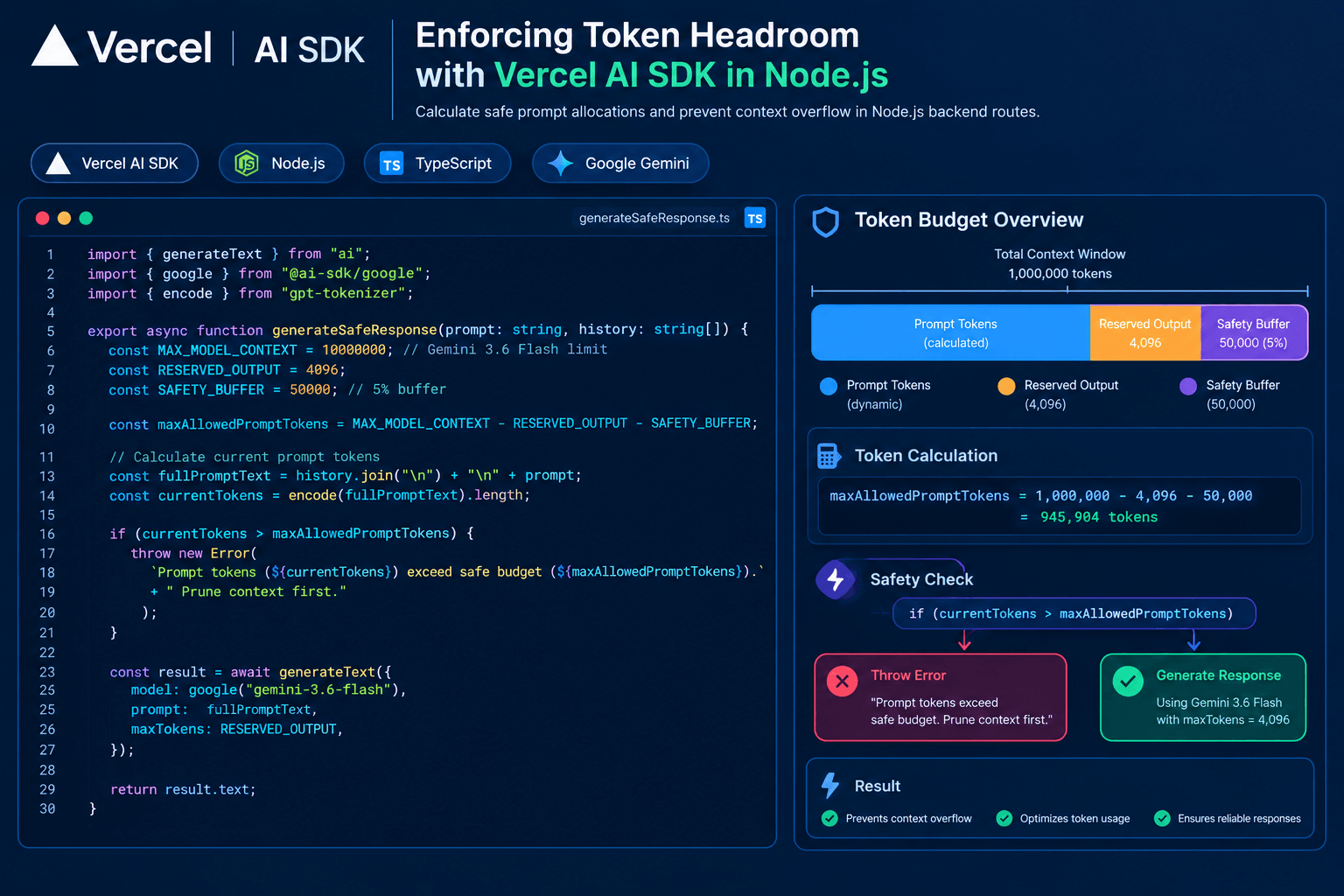
A prototype may send the full conversation, retrieved documents, tool definitions, and examples with every request. At production scale, that pattern can increase input-token use, processing time, and API cost. Large requests can also leave too little space for the model’s answer or exceed the selected model’s limits.
The context window is not unlimited storage. Its size and accounting rules depend on the model and API. Depending on the model, the total can include input, generated output, and reasoning tokens. Check the documentation for the model and endpoint you use; do not rely on a context limit remembered from another model.
What is a context window?
A context window is the maximum number of tokens a model can process for a request. A token is a unit of text encoding: it may represent a character, part of a word, a whole short word, or punctuation. The same sentence can tokenize differently across models, languages, and input formats.
For English prose, “about four characters per token” is a rough estimate, not a reliable counter. Code, JSON, multilingual text, images, files, and tool schemas can change the count. Count representative requests with the tokenizer or token-counting method intended for your model and API.
A request budget should include conversation messages, retrieved content, instructions, schemas, and tool definitions where applicable, plus enough room for the expected response. The right buffer depends on the model, endpoint, and task.
Why long inputs use more compute and memory
In standard self-attention, each token can be compared with other tokens in the sequence, so computation grows roughly quadratically with sequence length. Flash Attention reduces memory traffic and avoids storing a large intermediate attention matrix, but unnecessary context still has a processing cost.
During generation, many transformer models keep a key-value (KV) cache to reuse attention data from earlier tokens. Cache size varies by architecture and runtime. A simplified estimate is:
KV cache bytes ≈ 2 × layers × batch size × sequence length × KV heads × head dimension × bytes per value
The factor of two represents keys and values. This estimate omits implementation overhead. Grouped-query attention can reduce cache size by using fewer key-value heads. Use the architecture and serving stack’s actual parameters for deployment sizing.
Four context-management risks to plan for
1. Repeating history increases request size
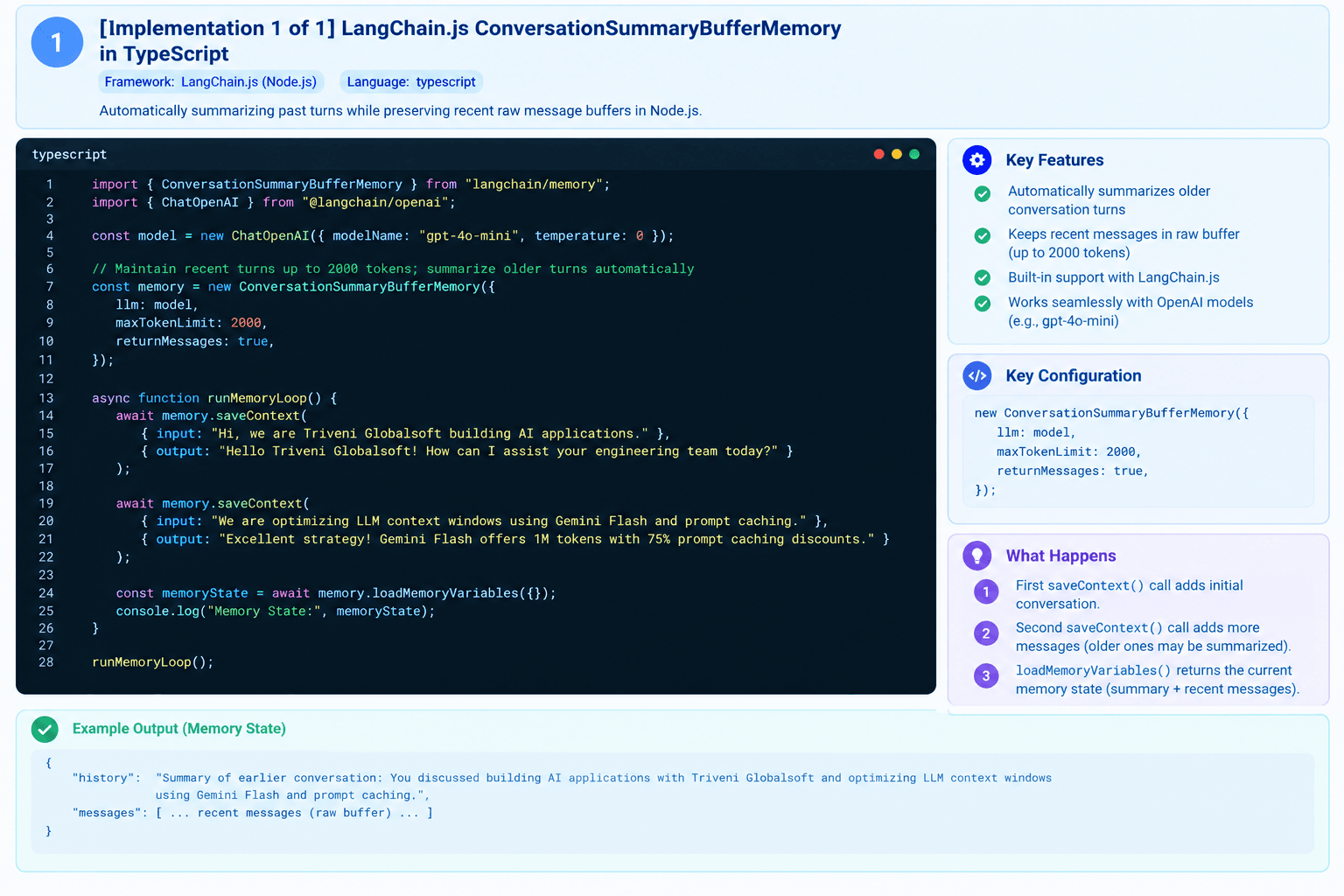
Sending every past turn can make requests grow over time, even when older details no longer affect the current answer. Retain the recent turns that matter, summarize older exchanges when appropriate, or retrieve only relevant records from a larger store.
2. Important information can be harder to retrieve from long context
Research has found that some language models perform less consistently when relevant information appears in the middle of long inputs. The result depends on the model, task, and prompt. Treat this as a reason to test retrieval quality with representative requests, not as proof that every model always misses middle content.
3. Input and output budgets can collide
A request that uses nearly all available context leaves little room for a complete answer. Depending on the API and settings, an oversized request may be rejected, or the generated answer may be incomplete. Validate request size and output limits before calling the model, and handle errors or incomplete responses in the application.
4. Token estimates vary across languages and formats
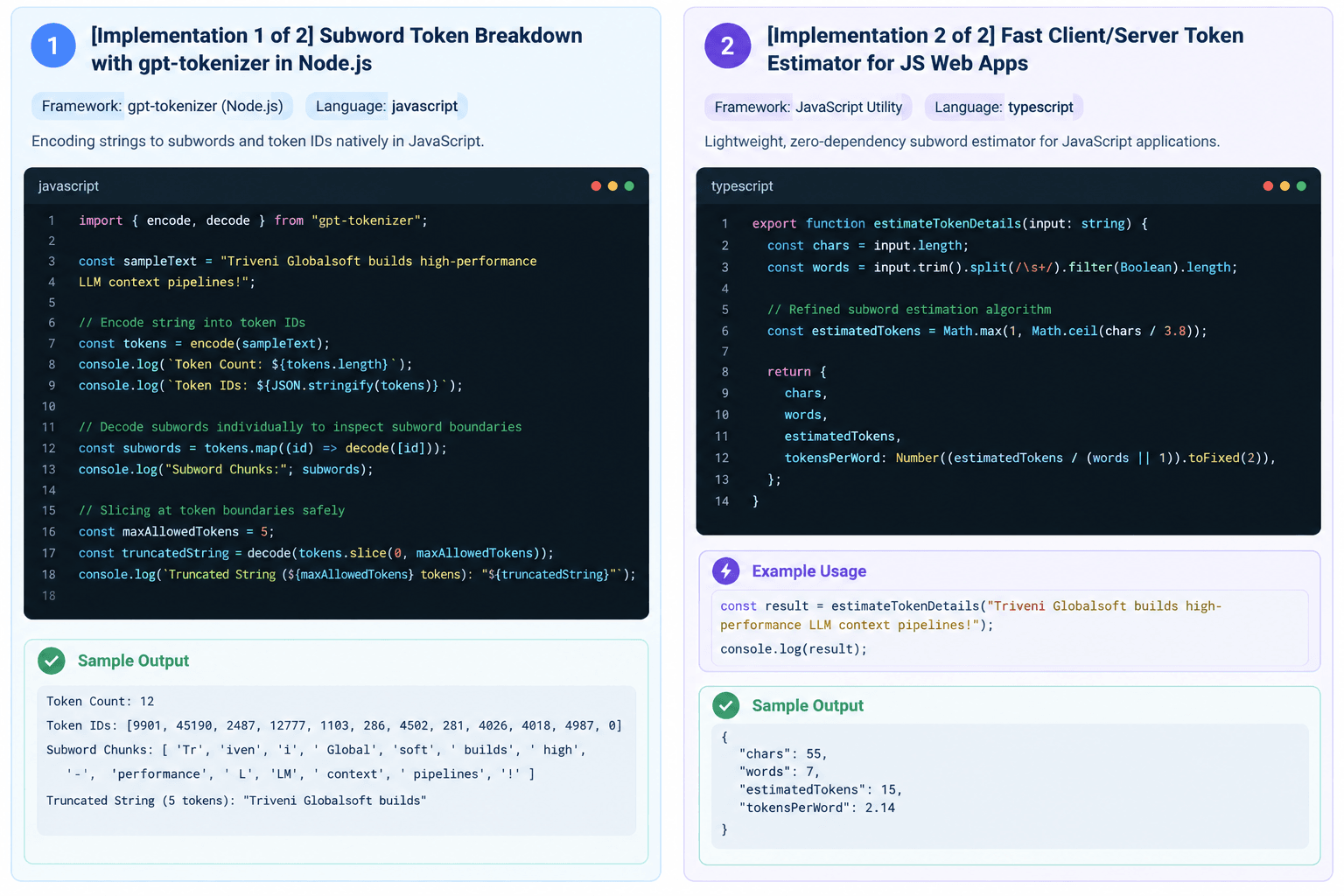
A character-based estimate can be inaccurate for source code, JSON, and languages with different tokenization patterns. Avoid fixed claims such as “this language always uses three times more tokens.” Measure real examples from the application’s expected inputs.
Practical context-management patterns for Node.js teams
Use a small set of controls together:
- Count before sending: Measure the request using the tokenizer or API method that matches the model and endpoint. Include message structure and tools when the counting method supports them.
- Remove duplication: Avoid resending repeated instructions, records, or conversation turns without a reason.
- Keep relevant context: Apply a recent-turn window, a maintained summary, retrieval from stored information, or a combination that fits the product’s needs.
- Set an output budget: Choose an output limit that fits the task and leave room for model-specific reasoning or formatting needs.
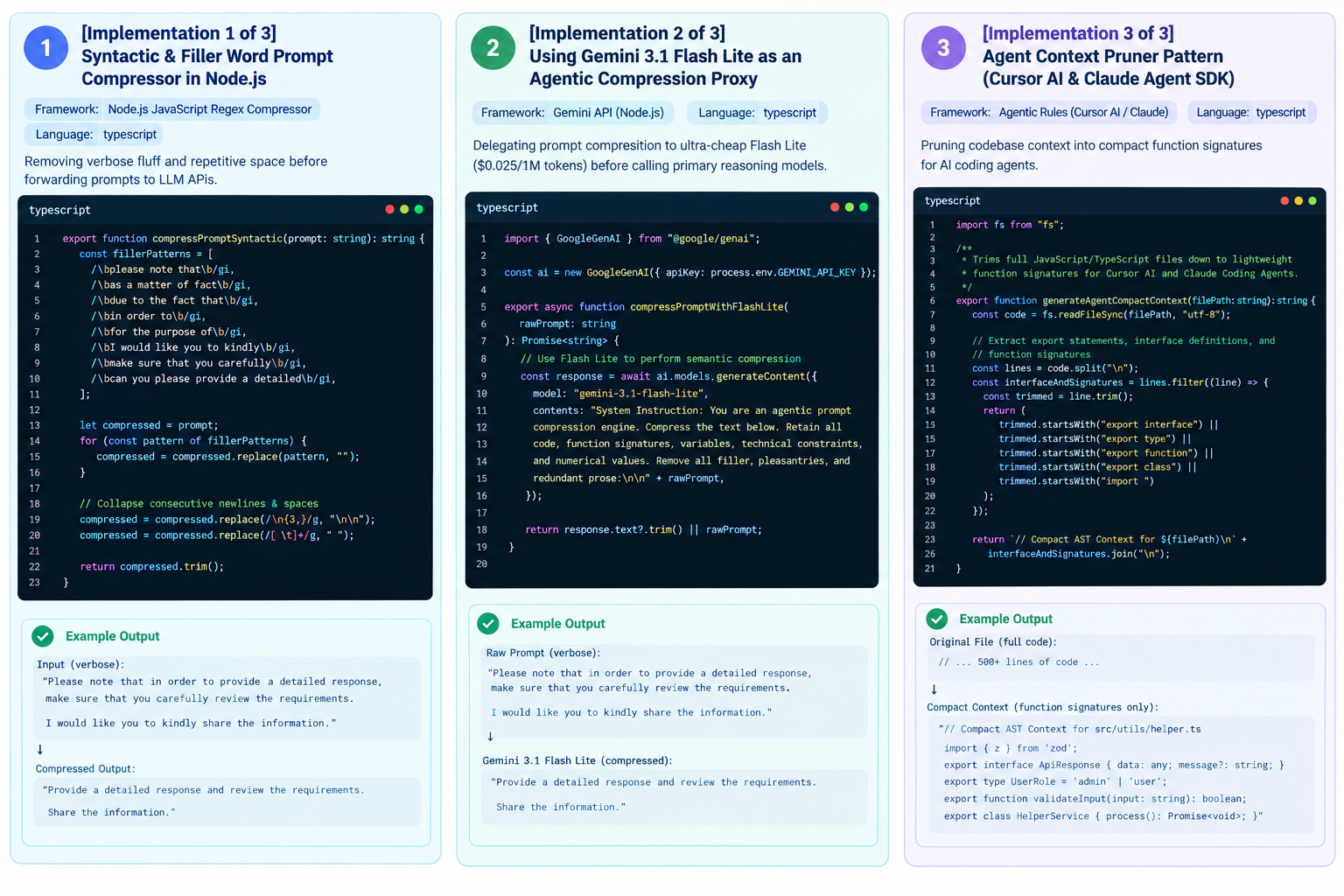
- Compress carefully: Summaries and prompt-compression methods can reduce input size, but they may remove details the model needs. Evaluate answer quality, latency, and cost on representative tasks before adopting them.
- Test position and edge cases: Place relevant facts at different positions, test long conversations and structured outputs, and verify how the app behaves near each model’s limits.
For example, a customer-support assistant may keep the latest exchange, retrieve only account or policy records relevant to the current issue, and summarize older conversation turns. The exact design should follow the assistant’s retention, privacy, and accuracy requirements.
A reliable approach to context management
Treat context-window management as an application-design task. Track request size and outcomes, remove redundant context, and compare retrieval or summarization strategies on representative workloads. Check answer quality, cost, and latency instead of assuming a compression ratio or memory estimate applies everywhere.
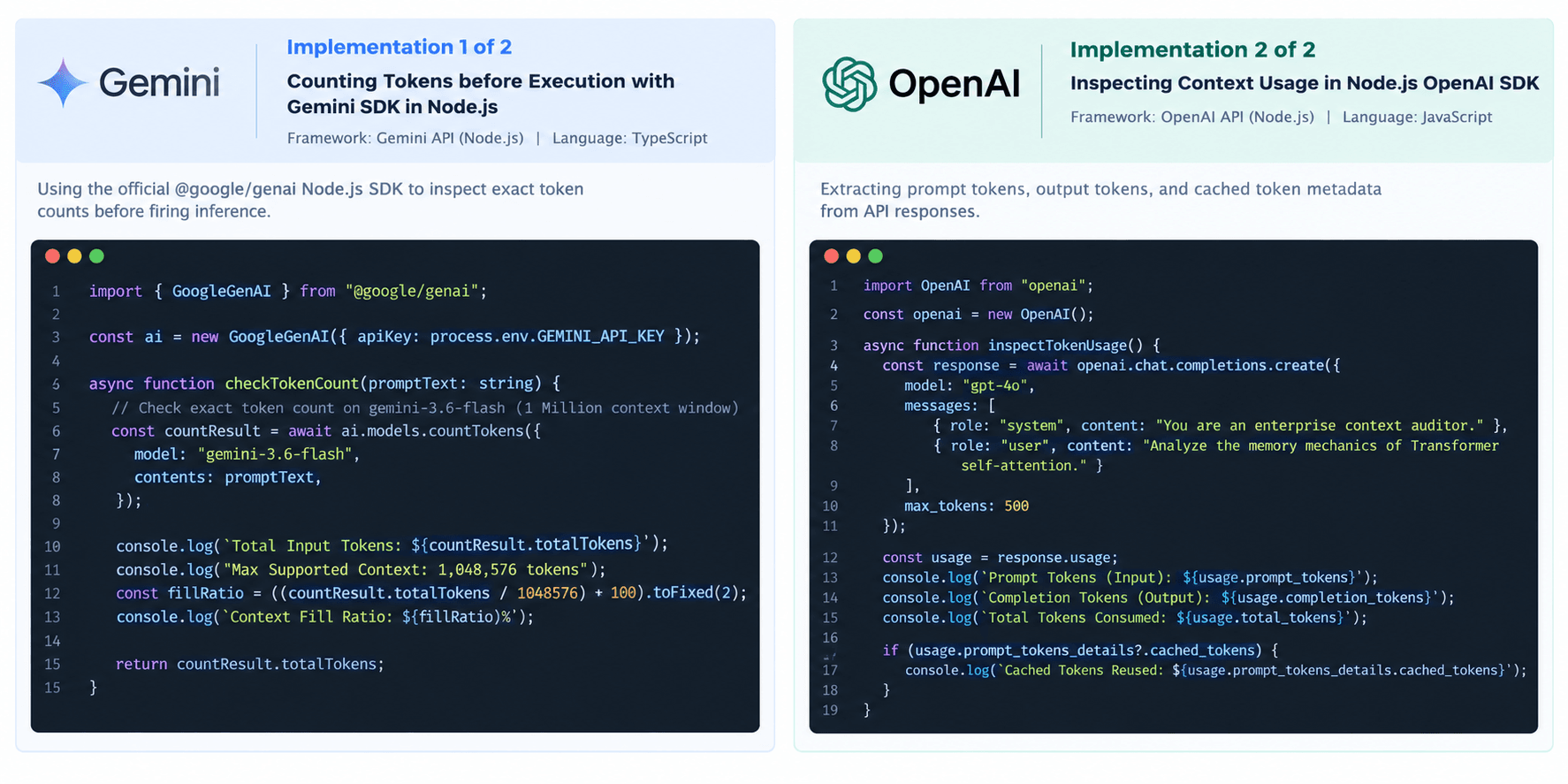
Part I covers the core concepts and risks. A follow-up can cover Node.js implementation patterns and code examples.
Planning an LLM-powered application?
Context-window decisions affect how an AI feature handles conversation history, retrieved information, response limits, and operating costs. If your team is planning a Node.js application with LLM capabilities, Triveni can discuss the software requirements and AI integration approach for your project.
Conclusion
Effective LLM context-window management helps Node.js applications use model limits thoughtfully. Count tokens with the method suited to your model and API, keep only relevant context, reserve room for responses, and test retrieval or summarization on real workloads. These practices help teams balance answer quality, processing time, and cost. Part 1 covered the core concepts and planning principles; Part 2 can show how to apply them with Node.js patterns and code examples.
Frequently Asked Questions (FAQs)
It is the maximum amount of tokenized input and output a model can handle in a request. The exact limit and what counts toward it vary by model and API.
Use the tokenizer or token-counting method appropriate for the model and API. A characters-per-token estimate is useful only for rough planning and can be inaccurate for code, schemas, multilingual text, images, and files.
No. A larger limit can allow more information in a request, but it does not guarantee that all information will be used accurately. Longer inputs may also increase processing requirements. Test the model with the context lengths and information positions expected in the application.
A key-value cache stores attention-related values from earlier tokens during generation so the model can reuse them as it produces later tokens. Its memory use depends on the model architecture, sequence length, batch size, data precision, and inference implementation.
No fixed reduction applies to every system. Compression may lower input-token use, but it can remove useful information and add processing steps. Compare cost, response time, and answer quality on representative tasks.
Share on Social Media
Related Blogs

Importance of UI/UX to Build the Best Website Design for Your Business
Read More: Importance of UI/UX to Build the Best Website Design for Your Business
What is the difference between .NET and Node.js?
Read More: What is the difference between .NET and Node.js?
How to create and deploy Python API in Docker?
Read More: How to create and deploy Python API in Docker?
How to Manage Error Handling and Logging in Node Js?
Read More: How to Manage Error Handling and Logging in Node Js?Stay ahead of the curve
Get the latest insights, tutorials, and industry news delivered straight to your
inbox. Join 10,000+ developers and tech leaders.